A pasture is more than just a place to eat grass
Sheep, goats, cattle and horses also create diverse habitats through their behavior.
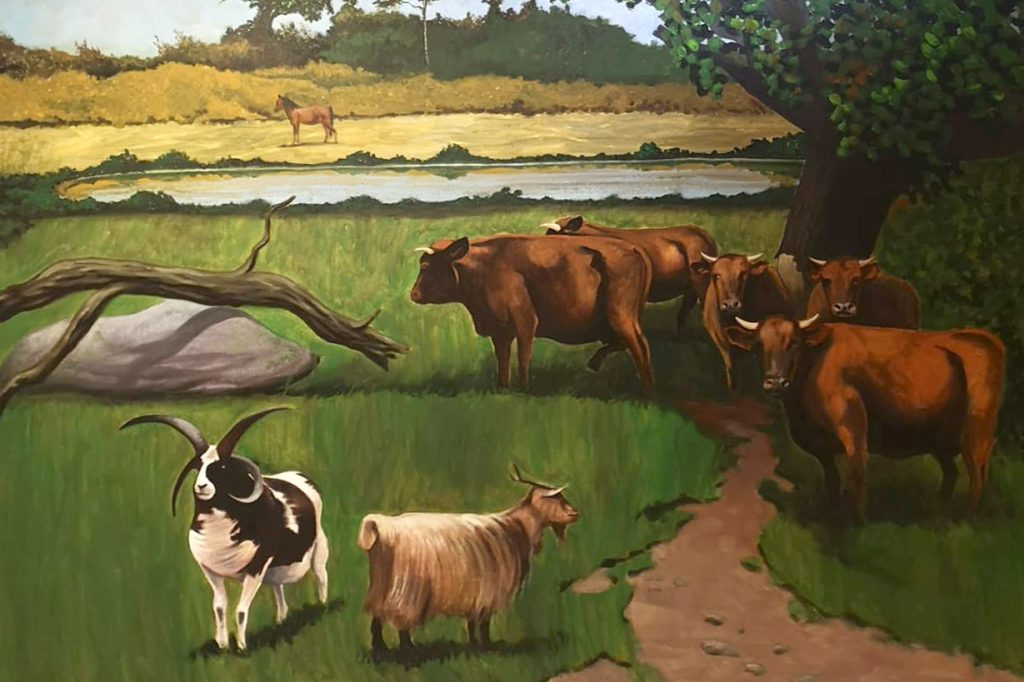
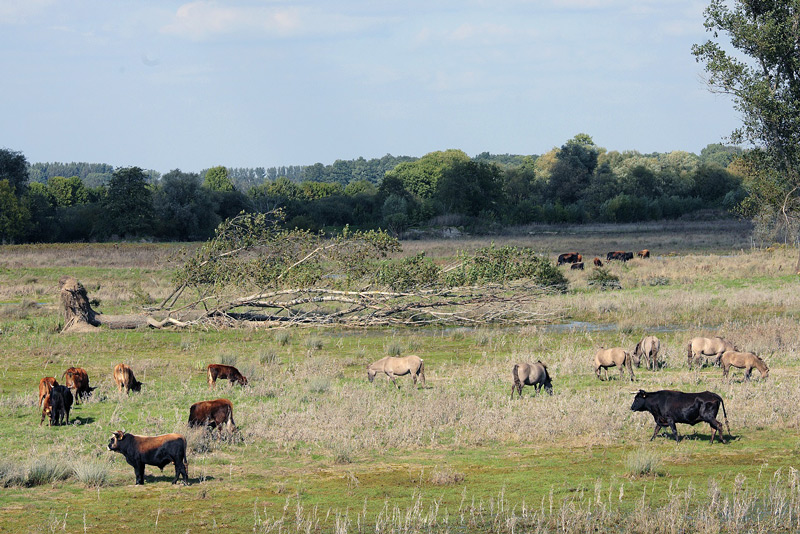
A pasture with sheep, goats, cattle or horses is more than just a place to eat grass. The grazing animals also create diverse habitats through their behavior. Where they create footpaths or open ground areas are created by rolling or scratching, this is not damage, but rather a prerequisite for insects nesting in the ground, such as wild bees, to be able to dig their nest tubes. And it is also the places where the seeds of grasses and herbs get into the ground and then germinate.
Sheep, goats, cattle and horses all have different preferences in what plants they like, which also encourages diversity on a pasture. And the grazing animals also leave some plants standing. In this way, important resources for many other organisms such as numerous insects or bird species are provided on a pasture. Be it as food or as important structures for reproduction. And what is also important, many a stalk into which a butterfly has then drilled its eggs survives the winter and the caterpillars hatch the following spring. Where the grazing animals have eaten the grass and herbs more intensively, birds such as the lapwing and corncrake can build their nests on the ground and have food just around the corner, so to speak.
It is nice if there are also open water points on the pasture. Of course important for the grazing animals, but they not only drink there, but in some places the banks of plants are exposed by their claws or hooves and sunbathing areas are formed for frogs and insects. Very important for the variety on a pasture are the dung heaps, which are constantly produced by the grazing animals. This is not just crap, but a habitat for many organisms with the job of bringing this crap back into circulation. Dung beetles, for example, are well-known, for them the dung patt of a cow is the nursery for the next generation. In order for a natural paradise to develop on the pasture, there must not be too many grazing animals there and the pasture should not be additionally fertilized.